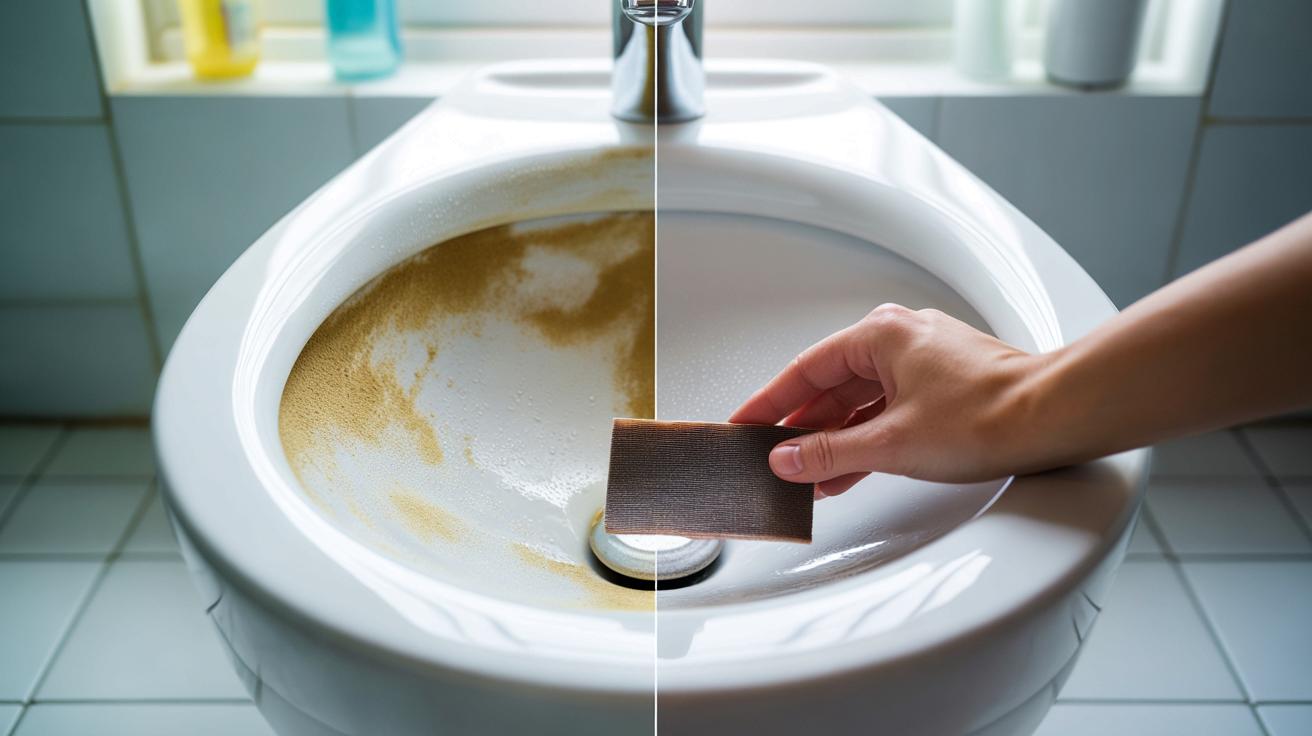
Across social media, one low-cost, low-effort trick is going viral, promising to restore the inside of your toilet to a near-factory shine in just a few minutes, with almost no scrubbing and no harsh bleach fumes.
The boring chore nobody really wants to do
Toilet cleaning usually sits right at the bottom of most people’s to-do list. Yet the bowl is one of the most frequently used fixtures in any home, and a prime spot for bacteria, mineral deposits and odours. Leave it too long, and those chalky rings and yellow or brown stains seem to set in for good.
Routine habits still matter. Flushing after every use helps prevent organic residue and bacteria from clinging to the porcelain. Keeping wipes, nappies, sanitary products and kitchen paper out of the bowl also avoids clogs that trap dirt and create smells.
A quick brush with a standard toilet cleaner once or twice a week can keep on top of basic grime. But many households find that, even with regular maintenance, limescale and marks under the waterline or on the inner rim refuse to budge.
When limescale and old stains have bonded to the porcelain, classic toilet gels and a basic brush often stop being enough.
The TikTok trend that’s quietly shaking up toilet cleaning
On TikTok, cleaning hacks now sit alongside recipes and fashion tips. One creator, known as Yoli, has gained attention by demonstrating a method that looks more like DIY than housekeeping – yet it’s surprisingly gentle on the toilet.
The “secret” product? Not a new chemical. Not an influencer-branded cleaning spray. It’s fine-grit wet sandpaper, the sort normally used for smoothing paintwork or car body panels.
In short videos, users show stained, dull bowls transformed into bright, glossy surfaces in a matter of seconds. The trick is in the grain size and how it’s used.
The product at the heart of the hack: fine wet sandpaper
Wet sandpaper is different from the rough sheets you might remember from school woodwork. Designed to be used with water, it has a much smoother surface and a very fine abrasive layer. When the grit number is high (for example 800, 1,000 or 1,500), it feels almost soft to the touch.
➡️ The simple trick to clean your jewellery easily and make it look new
➡️ Neither chess nor crosswords: the best activity to keep your brain sharp after 60
➡️ Few drivers know the meaning of this road sign – and the costly fine it can trigger
➡️ Warning signs are building: what’s brewing in the Pacific signals a harsher new climate phase
➡️ Forget the classic bedroom wardrobe, everyone now wants this space‑saving alternative
➡️ No vinegar, no soap: the magic trick to banish limescale from your electric kettle
➡️ Forget bleach and ammonia: the ingredient to add to your mop water for perfectly clean floors
Used correctly, fine wet sandpaper can lift mineral deposits and stains without scratching the porcelain glaze of the toilet bowl.
How the method actually works
The principle is simple: instead of relying on acid-based products to dissolve limescale, the fine abrasive gently “shaves” off the very top layer of deposits and surface dirt. Because the grit is so small, it polishes rather than gouges.
Here’s how creators say they do it at home:
- Choose the right grit: Opt for very fine wet sandpaper (high grit number) to avoid scratching the glaze.
- Soak the paper: Wet it thoroughly so it glides smoothly over the ceramic.
- Target the problem zones: Focus on the waterline, under the rim and any brown or yellow streaks.
- Use gentle pressure: Light, circular motions are enough; there’s no need to press hard.
- Rinse and check: Flush, then wipe with a damp cloth to remove loose residue.
Many users follow up with a brief scrub using an old toothbrush around tight curves or under the rim, where the sandpaper is harder to manoeuvre.
Why this odd-looking trick can be safer than it sounds
The idea of using sandpaper in the toilet feels reckless at first glance. Yet cleaning specialists point out that porcelain is highly durable when treated with care, and the protective glaze is tougher than many assume.
Fine wet sandpaper, used with plenty of water, behaves more like a polishing pad than a traditional abrasive. Rather than scraping deep into the surface, it removes build-up that has bonded to the glaze: limescale, rust marks from the water supply, and soap or cleaner residues.
The key is the combination of a fine grain and a wet surface: that reduces friction and protects the ceramic finish.
In the viral clips, users stress that they stick strictly to fine-grit paper, never the coarse sheets designed for smoothing rough wood. Coarse grits can leave visible scratches, which then attract more dirt and are almost impossible to hide.
What this method actually does better than chemicals
Strong toilet descalers and bleach-based products still have their place. But they work by reacting chemically with stains and mineral layers, and they can only reach so far under old build-up. Sandpaper takes a different route:
| Conventional cleaner | Fine wet sandpaper |
|---|---|
| Dissolves some limescale and organic matter | Physically removes the hardened surface deposits |
| May need long contact time | Works in a few seconds of gentle rubbing |
| Can leave a thin, dull film behind | Leaves a smoother, shinier surface |
| Relies on repeated chemical use | Relies on mechanical action and water only |
Once the stubborn build-up is removed, lighter, regular cleaning tends to work better. The bowl looks brighter, and stains no longer seem to reappear overnight.
How to use this trick without damaging your toilet
Used carelessly, any abrasive carries a risk. The method circulating on TikTok follows a few rules that help keep that risk low:
- Test first on a small, less visible area inside the bowl.
- If you feel roughness or see dull patches, stop and switch to a finer grit.
- Keep the surface and paper very wet throughout the process.
- Avoid decorative or coloured coatings, which may be more delicate than white porcelain.
For people in hard water regions, where limescale is a constant battle, using fine wet sandpaper a few times a year might replace repeated rounds of aggressive descalers.
What professionals say about mixing methods
Cleaning experts generally recommend combining approaches rather than relying on one single trick. For daily or weekly care, a mild cleaner and brush remain useful. The sandpaper approach sits more in the “deep clean” category, to reset a neglected bowl.
Think of fine wet sandpaper as a last step in a deep clean, not a replacement for simple, regular hygiene.
Some also suggest pairing the method with preventative habits: installing a water softener in very hard water areas, ventilating the bathroom well, and flushing promptly after each use.
Risks, limits and when to avoid the hack
There are scenarios where this trend is not a good idea. If a toilet already has visible chips, cracks or a heavily worn glaze, any abrasive can make damage worse. Vintage or coloured toilets may have more fragile finishes than modern white bowls.
Households with septic tanks need to be cautious about the products they use in general, although wet sandpaper itself adds no chemicals to the system. In rented accommodation, tenants may also want to check their contract or speak to their landlord before trying anything that alters fixtures.
Beyond toilets: where else fine wet sandpaper can help
Used correctly, the same product can tackle other ceramic and enamel surfaces that pick up mineral deposits, such as the inside of old sinks or bathtubs. The same precautions apply: only very fine grit, plenty of water, and a short test in a hidden corner first.
For people interested in cutting down on chemical cleaners, combining this method with simple staples such as white vinegar or baking soda can form a lower-cost, lower-toxin routine. Vinegar softens limescale, while the fine sandpaper finishes the job where deposits refuse to move.
There is also a psychological effect. Bathrooms can feel fresher and more pleasant when the toilet bowl actually looks pristine, rather than just vaguely “cleaned.” For many users, that visual reset makes it easier to keep up with quick maintenance, instead of avoiding the task until the next deep-clean crisis.