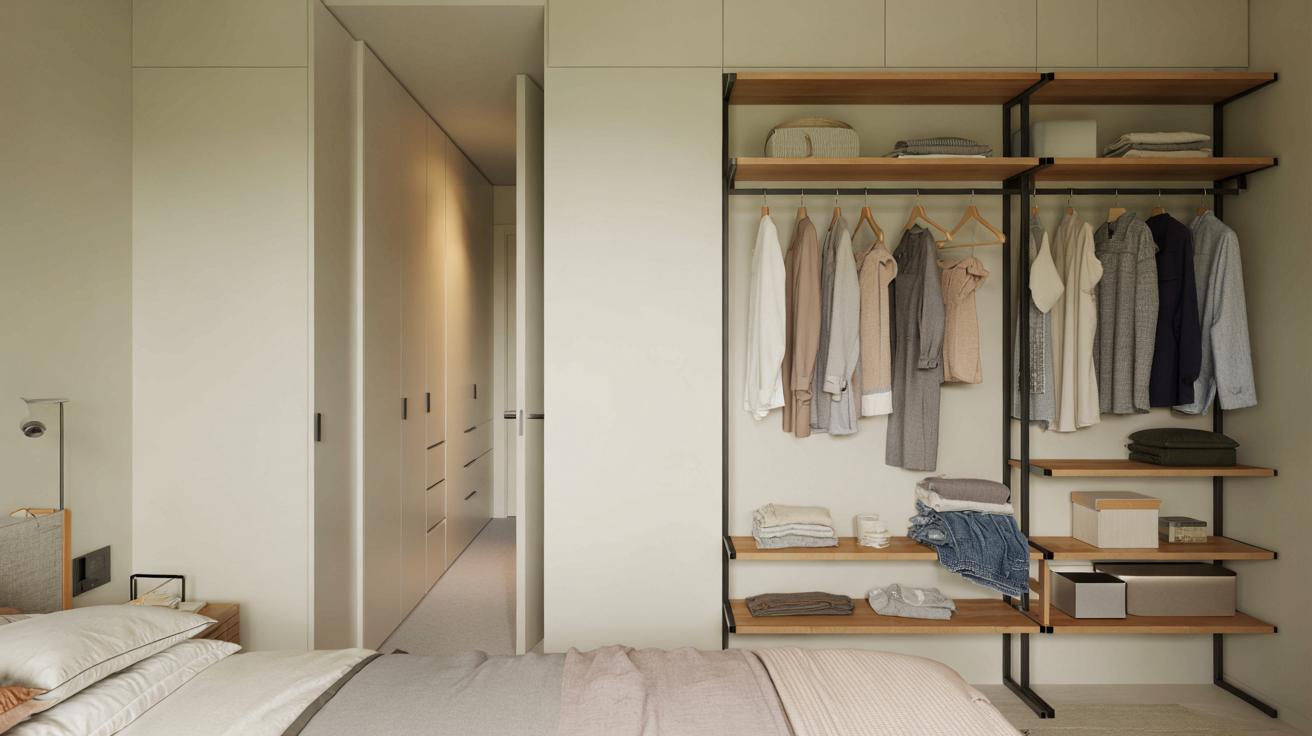
From open rails to clever built‑ins that wrap around doors, a new generation of storage solutions is reshaping how small bedrooms look and feel. Designers are rethinking the traditional wardrobe, and many homeowners are realising that a big box of doors along one wall no longer fits their lives or their floorplans.
Why the classic wardrobe no longer works for many homes
The standard freestanding wardrobe was designed for large, rectangular rooms with spare wall space. That’s not what many people have today. New‑build flats, subdivided period houses and rented rooms often come with narrow layouts, low ceilings or awkward corners.
Shoving a deep wardrobe into these rooms can block light, swallow floor area and make circulation awkward. Doors bang into beds, drawers can’t open fully, and dust collects in dead corners you can’t reach.
For many small bedrooms, a full‑depth wardrobe is less a storage solution and more a space‑eating obstacle.
On top of that, our clothing habits have shifted. Remote work and casual dress codes mean fewer bulky suits and formal outfits to hang. People own more flexible, foldable items: knits, activewear, denim. Storage can be shallower, lighter and more modular than the old carved armoire suggested.
Open wardrobes: when your clothes become part of the decor
The first big alternative winning fans is the open wardrobe or open rail system. Instead of a closed box with doors, it’s a light metal or wooden structure with a hanging rail, a few shelves and sometimes drawers at the base.
How an open wardrobe works in a small room
- Minimal depth: many models are only 40 cm deep, freeing up precious floor area.
- Visual lightness: you can see the wall behind, so the room feels larger and brighter.
- Flexibility: you can move the structure to another wall, or another home, without major work.
- Built‑in discipline: when everything is on show, overbuying clothes becomes more obvious.
Open wardrobes turn storage into a display, which suits people who like a curated, low‑clutter aesthetic.
To make an open system work, editing is crucial. Many people keep the everyday, nicer pieces on the rail and move bulky or out‑of‑season items under the bed or in boxes above a doorway. Matching hangers, fabric boxes and a limited colour palette help it look intentional rather than chaotic.
Wardrobes without doors: curtains instead of carpentry
For those who want something between a closed cupboard and a fully open rail, there’s a hybrid option: a wardrobe frame without doors, screened by curtains. The storage can be an affordable, basic carcass or a custom‑built frame; the “doors” are simple fabric panels on a ceiling or wall‑mounted track.
➡️ The product to use to clean the inside of the toilet like new, without effort and in seconds
➡️ Neither chess nor crosswords: the best activity to keep your brain sharp after 60
➡️ The simple trick to clean your jewellery easily and make it look new
➡️ Forget bleach and ammonia: the ingredient to add to your mop water for perfectly clean floors
➡️ Warning signs are building: what’s brewing in the Pacific signals a harsher new climate phase
➡️ Few drivers know the meaning of this road sign – and the costly fine it can trigger
➡️ No vinegar, no soap: the magic trick to banish limescale from your electric kettle
Why curtains beat swinging doors in tight spaces
Doors need clearance, both in front of the wardrobe and to the sides. Curtains don’t. They glide across without hitting the bed or the bedside table, which matters a lot in long, narrow rooms where every centimetre counts.
| Traditional doors | Curtain front |
|---|---|
| Require swing space | Need no swing space |
| More costly to replace | Fabric easy to change seasonally |
| Visually heavy | Softer, can match bedding |
Choosing the right fabric makes a big difference. Thick linen or velvet can hide any visual mess and block dust; light cotton gives a relaxed, beach‑house look. Because fabric is relatively cheap, you can refresh the room later without touching the structure behind it.
Building storage around the bedroom door
One of the most under‑used areas in a bedroom is the space above and around the door. Many designers are now wrapping shelving and cabinets around this frame, creating a kind of built‑in portal of storage.
Turning the wall around the door into a compact wardrobe can reclaim a strip of space that usually does nothing at all.
Shallow cupboards over the lintel and slim vertical units to the sides can hold folded knitwear, shoeboxes or spare bedding. With careful planning, doors can sit flush with the wall so the whole thing reads as panelling rather than a bulky cupboard.
This layout frees the main walls for a headboard, desk or chest of drawers. In very small rooms, that can mean the difference between fitting a standard double bed or settling for a narrow one.
Using the corridor as a hidden dressing room
Another emerging trend is shifting the wardrobe entirely out of the bedroom and into a hallway or corridor nearby. In many homes, corridors are long, under‑used and wide enough to host shallow built‑ins.
Made‑to‑measure or mixed solutions
People tend to follow one of two routes:
- Custom joinery: floor‑to‑ceiling cupboards built to the exact width of the corridor, painted in the same colour as the walls so they almost disappear.
- Hybrid set‑ups: a simple rail plus closed storage like benches and trunks that open from the top, ideal for shoes, bags or out‑of‑season duvets.
There’s a practical bonus: getting dressed outside the bedroom lets one person wake early and access clothes without switching on bright lights near a sleeping partner.
Turning nooks into niche wardrobes
New‑build flats, loft conversions and older houses often have strange alcoves, sloping ceilings or leftover recesses beside chimneys. These spots rarely fit standard furniture, so they end up wasted. Niche wardrobes aim to fill exactly those gaps.
Any recess deeper than a large coat hanger is a candidate for a niche wardrobe with shelves or a short rail.
Carpenters can install custom shelves, a mini hanging bar or drawers that slide right into the wall cavity. Seen from the room, the front can be finished with flush doors, sliding panels or even the same paint as the wall, giving a clean, built‑in look without overwhelming the space.
How to choose the right alternative for your bedroom
Each of these options answers a slightly different need. A studio flat might benefit from an open wardrobe that doubles as a design statement. A rented room with strict rules could use a metal rail plus under‑bed boxes that leave walls intact. A family home with a long landing might be best served by turning that corridor into a discreet dressing area.
A simple way to test ideas is to mark out potential wardrobe footprints on the floor using masking tape. Walk around the room at night, when you’re tired and less patient. If you keep clipping the tape with your feet, that spot or depth is probably too intrusive.
Practical tips, potential risks and smart combinations
Each alternative also comes with its own set of trade‑offs. Open systems collect more dust and demand regular tidying. Curtain fronts can sag if the track is weak or the fabric too heavy. Built‑ins around doors or in corridors need precise measurement to avoid blocking light switches or fire escape routes.
Ventilation should not be ignored. Clothes packed into very tight, unventilated cupboards can trap moisture, especially in older, poorly insulated properties. Leaving a few centimetres between the back of cabinetry and exterior walls, or choosing part‑open systems, reduces the risk of damp patches and musty odours.
Some of the most effective set‑ups use a mix of solutions: a slim open rail for frequently worn pieces, a niche wardrobe in a recess for formalwear, and a storage bench in the hallway for shoes and sports kit. This spreads your belongings across several zones, reducing clutter pressure in any one spot.
For renters, “reversible” options such as freestanding metal structures, tension‑mounted rails and curtain tracks fixed into existing holes give flexibility without upsetting landlords. Home‑owners planning renovations might think long term and integrate corridor wardrobes or door‑surround units at the same time as electrical work, to avoid paying twice for plastering and painting.
Behind the shift away from the classic bedroom wardrobe lies a broader trend: storage that adapts to the room, rather than forcing the room to adapt to storage. For compact urban spaces, that change can make a small bedroom feel less like a storage cupboard with a bed, and more like a calm, breathable place to sleep.