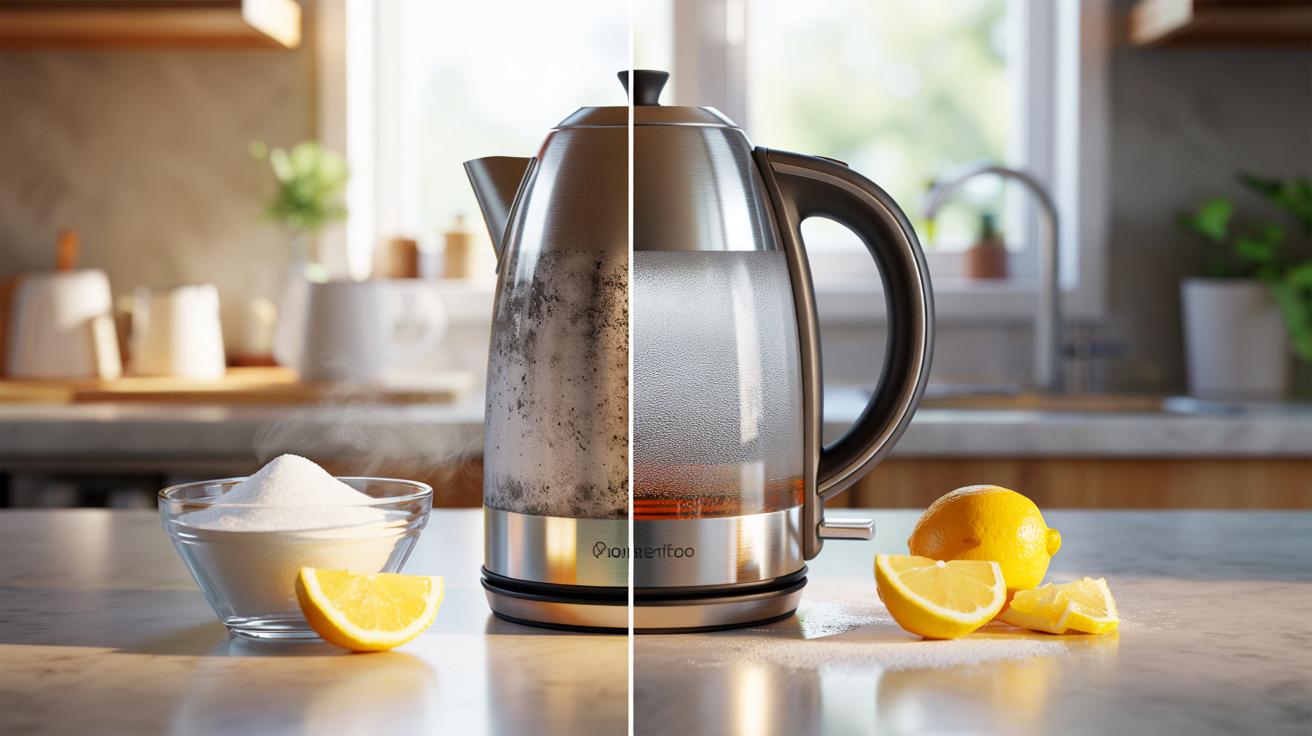
Limescale builds up faster than most tea drinkers realise, yet many still rely on harsh chemicals or give up and buy a new appliance. A simple kitchen combo offers a cheaper, gentler way to refresh your kettle and its flavour.
Why your kettle clogs up so quickly
If you live in a hard water area, your kettle sits on the front line. Each time water heats, dissolved minerals turn into solid deposits. Those deposits are what we call limescale.
Inside the kettle, these minerals cling to the heating element and the metal walls. At first, they form a thin, pale layer. With time, that layer becomes thick, rough and chalky.
Limescale is mostly calcium carbonate: harmless for health in normal doses, but bad news for your kettle’s efficiency and taste.
As the layer thickens, the appliance must work harder. The heating element is insulated by scale, so it takes longer to bring water to a boil. That delay means higher energy use and a shorter life for the device.
Limescale also flakes off into the water. It can leave a slight film on your tea, alter the taste of coffee and create those white specks that float at the surface of your drink. Many people blame their tea brand, when the real culprit is the kettle.
Why skipping descaling costs you money
Ignoring limescale doesn’t break the kettle overnight. The damage is slow and invisible at first, which is why so many people postpone cleaning it.
- Boiling time increases, so you stand around waiting longer.
- Energy bills rise as the kettle draws more power to reach the same temperature.
- The heating element can overheat and fail earlier than expected.
- Off-flavours creep into tea, coffee and baby bottles.
In the long run, that often ends with a premature replacement. A kettle that should last several years is binned after one or two, mostly because of preventable scale damage.
Regular descaling is less about cleanliness and more about extending the life and efficiency of one of the most-used gadgets in the kitchen.
➡️ Forget bleach and ammonia: the ingredient to add to your mop water for perfectly clean floors
➡️ The simple trick to clean your jewellery easily and make it look new
➡️ Warning signs are building: what’s brewing in the Pacific signals a harsher new climate phase
➡️ Few drivers know the meaning of this road sign – and the costly fine it can trigger
➡️ Forget the classic bedroom wardrobe, everyone now wants this space‑saving alternative
➡️ Neither chess nor crosswords: the best activity to keep your brain sharp after 60
➡️ The ingredient you need to add to your mop bucket for floors that stay clean longer
The “no vinegar, no soap” method that actually works
Many people swear by white vinegar for limescale. Others hate the sharp smell that lingers in the kitchen and in the kettle. Chemical descalers are quick, but they cost more and come with warning labels.
There is a quieter option: a blend of baking soda and fresh lemon. Both are found in many kitchens, both are food-safe, and together they are surprisingly effective against limescale.
Why baking soda and lemon make a strong team
Baking soda, or sodium bicarbonate, is mildly abrasive and alkaline. It helps loosen deposits and softens that crusty texture on the metal.
Lemon brings natural citric acid. Acid reacts with calcium carbonate and breaks it down into soluble compounds that rinse away easily. The juice also neutralises odours and leaves a fresher scent than vinegar.
The reaction between lemon’s citric acid and the minerals in limescale helps dissolve the crust without scratching or damaging the kettle.
Step-by-step: how to descale your electric kettle
This method takes around half an hour, most of it hands-off time.
| Step | What to do |
|---|---|
| 1 | Unplug the kettle and let it cool completely. Empty all remaining water. |
| 2 | Slice a fresh lemon into 3–4 rounds and place them inside the kettle. |
| 3 | Add about one tablespoon of baking soda directly into the kettle. |
| 4 | Fill the kettle with cold water up to the usual maximum level. |
| 5 | Switch it on and bring the mixture to a full boil. |
| 6 | Turn the kettle off and let the hot solution sit for around 20 minutes. |
| 7 | Carefully pour out the water, then gently scrub inside with a soft sponge. |
| 8 | Rinse thoroughly with clear water once or twice to remove any residue. |
On kettles with very heavy build-up, a second round may be needed. For stubborn patches around the spout or base, you can use a paste made from baking soda and a few drops of water, applied with a soft brush.
How often should you descale?
The ideal frequency depends on how hard your water is and how often you boil it. Many households underestimate both.
For most UK and US homes, a routine descale every 4 to 6 weeks keeps limescale under control.
In areas where the water leaves a white ring on glasses or taps within days, shortening that interval makes sense. A quick visual check inside the kettle once a week helps. If you notice a rough, pale crust forming, it is time to act.
Another simple habit makes a big difference: empty the kettle after use. Leaving hot water to sit invites more mineral deposits and gives them longer to bind to the metal.
Other methods people use – and when they make sense
If you are out of lemons or baking soda, you still have options in most kitchens.
- White vinegar: Mix one part vinegar to two parts water, boil, let sit 15–20 minutes, then rinse very well.
- Citric acid powder: A teaspoon dissolved in water can work similarly to lemon juice for heavy scale.
- Commercial descalers: Useful for extreme build-up, but follow instructions strictly to protect both your kettle and your skin.
Many technicians warn against abrasive tools such as metal scourers. They can scratch the inner surface and damage the protective coating, which makes future limescale cling even more.
Safety habits that go beyond limescale
One widespread shortcut raises hygiene questions: filling the kettle with hot water straight from the tap. It feels quicker, yet it comes with a downside.
Hot tap water can linger in pipes and cylinders, creating conditions where bacteria and metals accumulate more easily than in cold mains water.
Cold water is usually fresher and moves faster through the mains system. Choosing cold, then heating it in the kettle, reduces the risk of unwanted contaminants and gives you better control over the boil.
Also, never immerse the base or the electrical parts of an electric kettle in water. When cleaning the exterior, use a damp cloth and dry it well before plugging it back in.
What “hard water” actually means for your kitchen
Hard water simply contains more dissolved minerals, mainly calcium and magnesium. These minerals are not harmful for most people and even contribute to daily intake. The real issue is what they leave behind when heated.
Those same deposits that cloud your kettle also form on shower heads, taps and inside washing machines. So habits you build around kettle care often spread naturally to other areas of the home: wiping taps dry, descaling shower heads, or occasionally running a hot wash with citric acid through the washing machine.
Small routines that change how your drinks taste
For heavy tea or coffee drinkers, the difference after a proper descale is noticeable. Water boils faster, the flavour becomes clearer, and that slight chalky aftertaste fades.
A simple routine could look like this: once a month, pick a quiet evening, descale the kettle with lemon and baking soda, rinse it well, then make a test cup of plain hot water. Smell it, taste it, and compare with what you are used to. Many people only realise how dulled their drinks had become when they taste freshly boiled water from a clean kettle.