Many older adults notice names slipping away and sentences stalling. That shift feels unsettling, but it is far from a dead end. A simple, old-fashioned game, often overlooked next to chess and sudoku, is gaining attention as a powerful ally for the ageing brain.
The unexpected brain workout hiding in your cupboard
The star of the story is checkers – or draughts, as it’s known in the UK.
At first glance, checkers looks straightforward: 12 pieces each, a few basic rules, no fancy pieces like queens, bishops or knights. This apparent simplicity is exactly why many people underestimate it. Yet behind that simple board lies a real mental training ground.
Checkers demands planning, flexible thinking and sustained focus, without the intimidation factor of chess.
To play even a modest game, you need to:
- Track where every piece is and where it can move next
- Watch your opponent’s patterns and likely traps
- Plan several moves ahead while adapting to surprises
- Switch between attack and defence without losing control
This constant back-and-forth forces your brain to stay active. For people over 60, that kind of engagement can make a real difference to how thinking skills hold up over time.
What the science says about games and dementia risk
Checkers is not a magic shield against dementia, but it fits into a wider picture that researchers are starting to map more clearly.
A well-known study published in the New England Journal of Medicine followed 469 people aged over 75 who did not have dementia at the start. Researchers looked at their leisure habits, from reading to playing board games such as checkers.
Those who regularly engaged in mentally stimulating activities showed a lower risk of developing dementia over about five years of follow-up.
➡️ Forget the classic bedroom wardrobe, everyone now wants this space‑saving alternative
➡️ The simple trick to clean your jewellery easily and make it look new
➡️ The product to use to clean the inside of the toilet like new, without effort and in seconds
➡️ Warning signs are building: what’s brewing in the Pacific signals a harsher new climate phase
➡️ No vinegar, no soap: the magic trick to banish limescale from your electric kettle
➡️ The ingredient you need to add to your mop bucket for floors that stay clean longer
➡️ Few drivers know the meaning of this road sign – and the costly fine it can trigger
For each small increase in their “cognitive activity” score, the risk of dementia dropped by about 7%. That doesn’t prove causation, but it strongly suggests that keeping the brain busy – in structured, enjoyable ways – has protective effects.
Checkers fits neatly into this category: it’s accessible, inexpensive, and can be played almost anywhere, including care homes, community centres or at the kitchen table.
How checkers strengthens key cognitive skills
Memory gets a gentle, regular challenge
During a game, you need to remember what just happened and what tends to happen next.
You recall:
- Recent moves, so you can spot patterns or set up traps
- Your own strategic plan, including which side of the board you’re working from
- Past mistakes, so you avoid repeating them in later games
This kind of “working memory” exercise resembles mental training used in cognitive rehabilitation. It is low-pressure but constant, especially when games are played several times a week.
Attention and focus stay switched on
Distraction is the quickest route to losing a piece in checkers. You can’t simply stare at your own side of the board. You must stay alert to every possible jump your opponent might make.
Each move is a mini exercise in selective attention: focusing on what matters and ignoring what does not.
That skill matters in everyday life. The same mental filter helps when driving, managing medication, or following a conversation in a noisy café.
Logical reasoning and planning are trained step by step
Even though the rules of checkers are simple, good play requires reasoning:
| Skill | How the game trains it |
|---|---|
| Planning | Choosing a move based on what could happen several turns ahead |
| Problem-solving | Finding a way out when you are cornered or behind in pieces |
| Flexibility | Changing strategy quickly when your opponent surprises you |
These are the same abilities people draw on when adjusting to retirement, managing finances, or adapting to health changes.
Faster thinking and sharper reactions
As we age, responses can feel slower. That can be frustrating when trying to keep up with family conversations or new technology. Checkers gently pushes the brain to react in real time, especially if you agree on a time limit per move.
Regular play nudges mental processing speed, encouraging quicker, more confident decisions.
You weigh risk, choose a move, and live with the result. Over weeks and months, many players notice they “see” threats and opportunities more quickly, both on the board and in everyday situations.
Why checkers supports emotional health and self-esteem
Social contact wrapped in a simple game
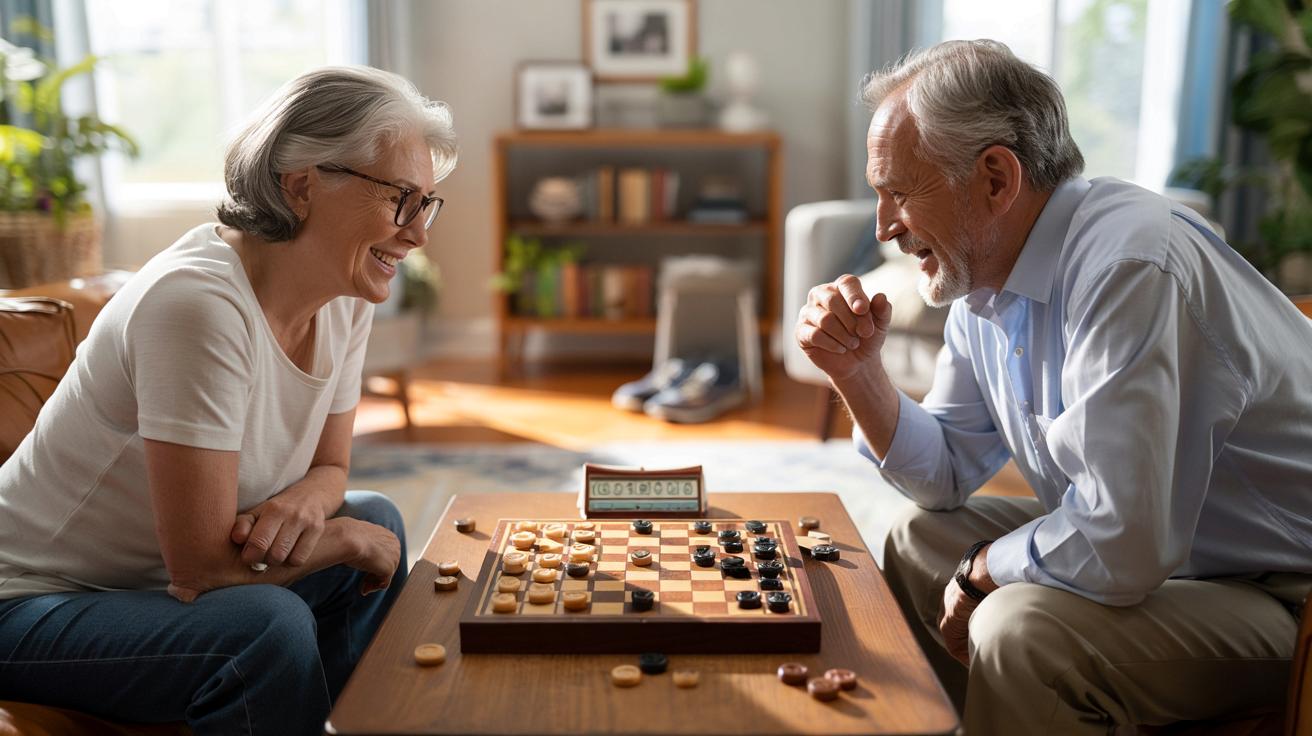
Loneliness is a serious risk factor for depression and cognitive decline in older people. Checkers naturally brings people face to face – literally across a board.
It works well for:
- Regular games with a partner or spouse
- Grandparent–grandchild afternoons, where rules are easy to teach
- Community tournaments in local halls or retirement villages
The conversation during the game – the jokes, the mild teasing, the shared concentration – matters as much as the moves themselves.
Small victories, real confidence
Winning a hard-fought game gives a quick shot of satisfaction. For someone who may feel slower or less capable than before, that sense of “I can still outsmart someone” can be surprisingly powerful.
Each game offers a manageable challenge with a clear outcome, boosting self-belief when things go well – and resilience when they do not.
Even close losses can feel energising if the match was engaging and respectful. Many older players say checkers helps them feel “mentally alive” again.
How to start playing checkers after 60
Keep the barrier to entry low
You only need three things: a board, a partner, and a bit of curiosity. Sets are cheap, and rules fit on a single page. For those with vision difficulties, there are boards with larger squares and high-contrast pieces.
If you are rusty or never learned, start with short games. Aim for 10–15 minutes at first, then gradually extend the match as enjoyment grows.
Fit it into everyday life
Checkers works best when it becomes a routine rather than a rare event. For instance:
- One game before dinner, a few evenings a week
- A standing “checkers date” with a neighbour on Sunday afternoons
- Rotating opponents at a seniors’ club once a fortnight
This regularity helps keep the brain stimulation steady without feeling like homework.
Combining checkers with other brain-friendly habits
Checkers is one piece of the healthy ageing puzzle. Researchers often talk about “cognitive reserve” – a kind of mental buffer built through learning, socialising and staying active across life.
That reserve grows when checkers is combined with other habits such as:
- Reading books or newspapers regularly
- Walking or gentle exercise several times a week
- Learning new skills, like a language, a musical instrument or basic computer use
- Keeping blood pressure, diabetes and cholesterol under control
The effects tend to add up. A senior who plays checkers, reads, and stays physically active gives their brain multiple reasons to stay resilient.
Practical scenarios and small adjustments
For someone worried about memory slips, a realistic plan might be simple: schedule three 20-minute checkers games a week with a friend, plus one solo practice session against a phone or tablet app. Track how focused you feel over a couple of months.
For those with mild cognitive impairment, games can be slightly adapted: allow more time per move, play with fewer pieces, or gently talk through options aloud. That keeps the mental workout while reducing frustration.
There are risks of fatigue or discouragement if games are too long or opponents are much stronger. Shorter matches, friendly coaching and mixed-ability groups help maintain enjoyment and confidence.
Checkers will not stop ageing, but as a low-cost, sociable and stimulating habit, it punches far above its weight for brains over 60.